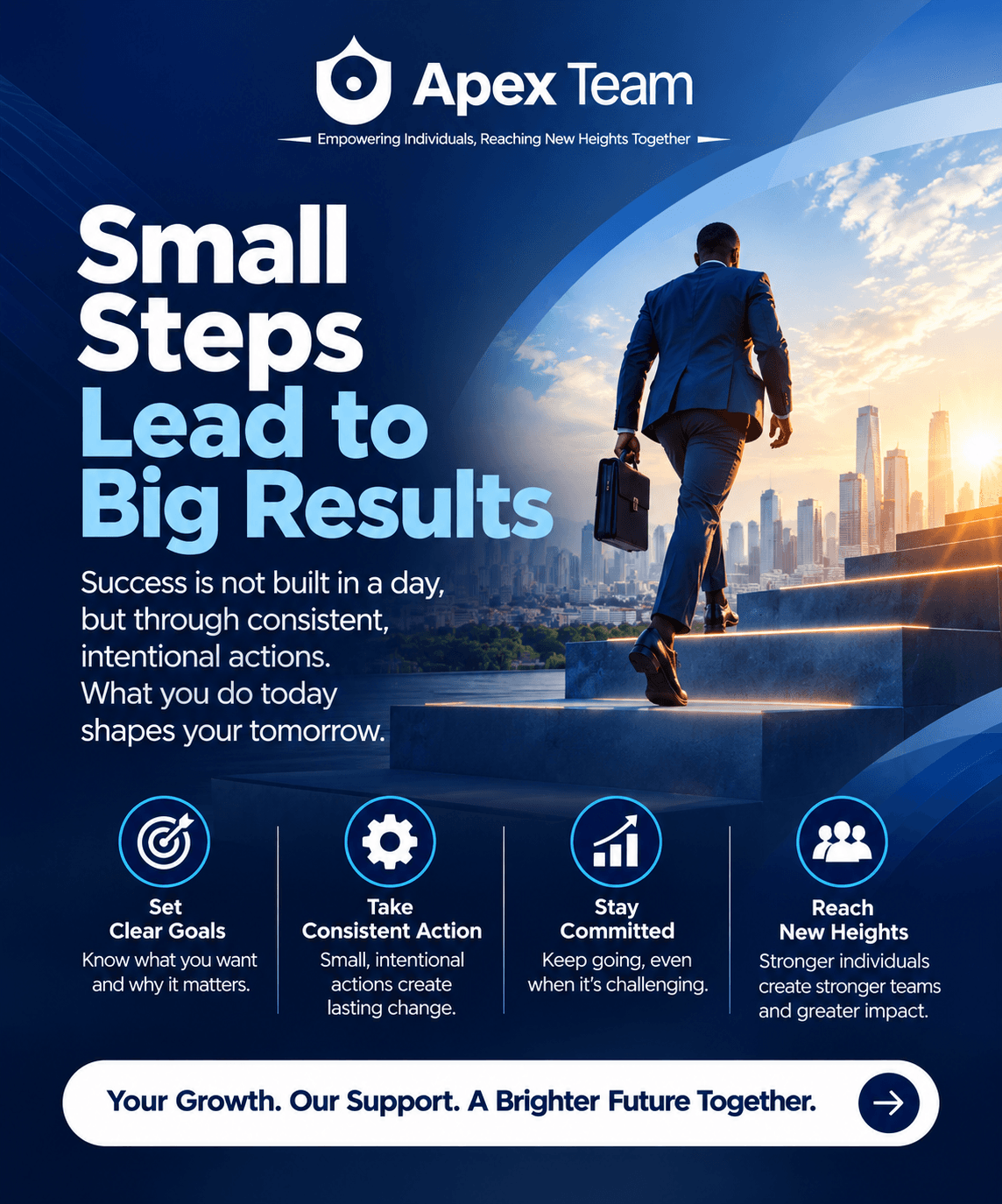
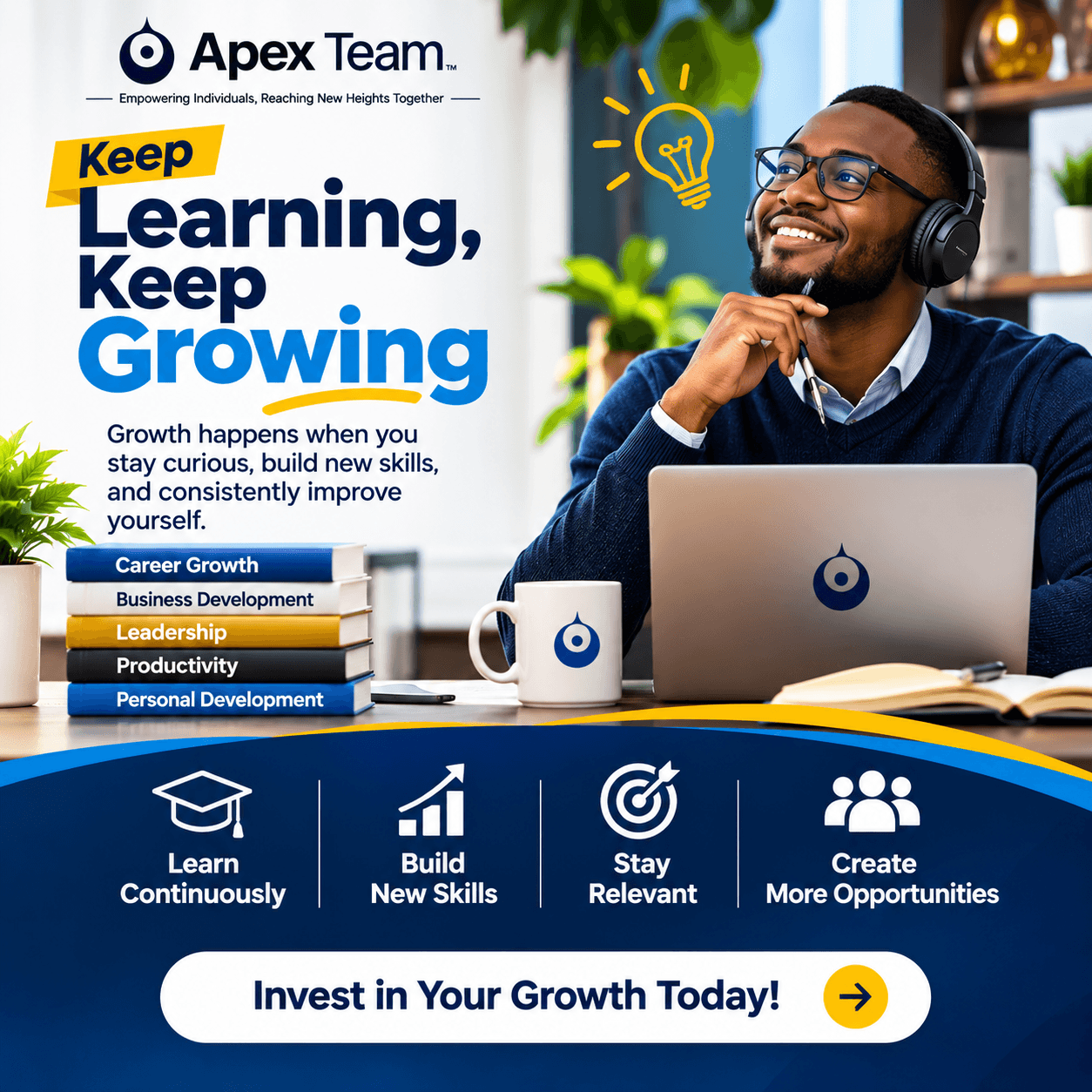
Continuous learning is essential for personal growth, career advancement, business development, and effective leadership. Discover practical ways to develop new skills, remain adaptable, and unlock greater opportunities.
Keep Learning, Keep Growing: Why Continuous Development Matters for Success
Success is not a destination where learning comes to an end. It is a continuous journey that requires individuals to develop their knowledge, improve their abilities, adapt to changing circumstances, and remain open to new opportunities.
The world is constantly evolving. Industries are changing, technology is transforming how people work, businesses are adopting new strategies, and professional expectations continue to develop.
In this environment, remaining committed to learning is no longer simply an advantage. It is an important part of personal and professional development.
At Apex Team, we believe that individuals who invest in their knowledge, skills, and personal development position themselves to pursue greater opportunities and contribute more effectively to their communities, workplaces, and businesses.
The principle is simple: Keep learning, keep growing, and never stop improving yourself.
Why Continuous Learning Matters
Learning should not end when you complete formal education or secure a job. Every stage of life presents opportunities to acquire new knowledge and develop useful abilities.
Consider a professional who wants to advance into a leadership position. Technical expertise alone may not be enough. They may also need to develop communication, strategic thinking, decision-making, and people-management skills.
Similarly, an entrepreneur who wants to grow a business must understand customers, market trends, financial management, marketing, and operational efficiency.
Continuous learning helps individuals remain adaptable and better prepared for the demands of their chosen paths.
Five Areas Where Continuous Learning Can Transform Your Growth
1. Career and Professional Development
The professional world rewards individuals who remain willing to improve their capabilities.
Developing relevant skills, understanding industry changes, improving communication, and building professional relationships can help you become better prepared for career opportunities.
For professionals seeking advancement, learning should be intentional.
Consider:
- Developing technical and industry-specific skills.
- Improving communication and presentation abilities.
- Learning how to use relevant digital tools.
- Strengthening your professional brand.
- Understanding current industry expectations.
Your qualifications may help you enter a professional environment, but continuous development helps you remain competitive and prepared for new responsibilities.
2. Entrepreneurship and Business Development
Running a business requires more than having a good idea.
Entrepreneurs must continuously learn about their customers, competitors, marketing strategies, financial management, and service delivery.
A business owner who refuses to learn may struggle to adapt when customer expectations or market conditions change.
On the other hand, entrepreneurs who actively seek knowledge can identify areas for improvement, make more informed decisions, and explore opportunities for expansion.
Business growth begins with a willingness to understand what works, recognise what needs improvement, and adapt accordingly.
3. Leadership and Team Management
Leadership is not simply about holding a position or giving instructions. It involves influencing people, communicating effectively, making responsible decisions, and helping others achieve their potential.
Effective leaders understand that they must continue learning.
They seek feedback, study leadership principles, listen to their team members, and evaluate their management approach.
Some important leadership skills to develop include:
- Effective communication.
- Emotional intelligence.
- Strategic thinking.
- Conflict resolution.
- Delegation and accountability.
- Coaching and team development.
A leader who continues learning creates more opportunities to become a better example for others.
4. Personal Development and Self-Awareness
Growth is not limited to professional achievements or business success.
Developing self-awareness, discipline, confidence, time management, and decision-making abilities can positively influence different areas of life.
Personal development requires an honest understanding of your strengths, weaknesses, habits, and areas that need improvement.
Read useful books, learn from experienced individuals, evaluate your decisions, and remain open to constructive feedback.
The more you understand yourself, the better equipped you become to make intentional decisions about your future.
5. Adaptability and New Opportunities
Opportunities often emerge in environments where people are willing to explore new ideas and acquire new skills.
Learning helps you recognise changes, understand emerging trends, and prepare for different possibilities.
For example, developing digital skills may introduce you to remote work opportunities, online entrepreneurship, digital marketing, or new professional responsibilities.
The ability to learn and adapt can help you respond more effectively when circumstances change.
Practical Ways to Become a Continuous Learner
You do not need to enrol in an expensive programme or spend several hours every day studying to begin developing yourself.
What matters is creating a consistent learning routine.
Here are seven practical ways to get started:
1. Read regularly: Explore books, articles, industry publications, and educational resources related to your interests.
2. Take online courses: Use reputable learning platforms to acquire relevant knowledge and practical skills.
3. Learn from experienced people: Connect with mentors, professionals, entrepreneurs, and leaders who can share valuable experiences.
4. Practise what you learn: Knowledge becomes more useful when you apply it to real situations.
5. Ask questions: Remain curious and develop the habit of seeking clarification when you encounter something unfamiliar.
6. Accept constructive feedback: Feedback can reveal areas you may not recognise on your own.
7. Review your progress: Regularly evaluate what you have learned, how you have applied it, and where you need further development.
Build a Personal Learning Routine
One effective way to remain committed to learning is to establish a simple weekly routine.
For example:
- Monday: Identify one skill you want to improve.
- Tuesday: Study a relevant topic.
- Wednesday: Practise what you have learned.
- Thursday: Seek feedback or guidance.
- Friday: Apply your knowledge to a practical task.
- Saturday: Review your progress.
- Sunday: Reflect and identify what you want to learn next.
The specific schedule can change depending on your responsibilities. The important thing is to make learning a regular part of your development.
The Apex Team Perspective: Growth Is a Continuous Journey
At Apex Team, we believe that every individual has the potential to develop, contribute, and pursue greater achievements.
However, potential alone does not guarantee progress. It must be supported by willingness to learn, discipline, practical action, and an environment that encourages development.
We recognise the importance of building individuals who are not only ambitious but also knowledgeable, adaptable, responsible, and prepared to embrace new opportunities.
Whether your ambition is to become a better professional, a successful entrepreneur, an effective leader, or a more developed individual, your commitment to learning will remain valuable throughout the journey.
We encourage everyone to see learning not as an activity that ends after achieving a particular milestone, but as a lifelong commitment.
Conclusion: Invest in Yourself Today
Never allow your current level of knowledge to limit your future potential.
There is always something new to discover, a skill to develop, a weakness to improve, or an opportunity to understand better.
Make learning a priority. Invest your time in activities that develop your abilities, surround yourself with people who encourage improvement, and consistently apply the knowledge you acquire.
Remember, the person you become tomorrow is influenced by what you choose to learn and practise today.
Keep learning. Keep growing. Keep becoming better.
Apex Team
Empowering Individuals, Reaching New Heights Together.
What new skill, knowledge, or ability are you committed to developing this month? Take the first step and make your growth intentional.